
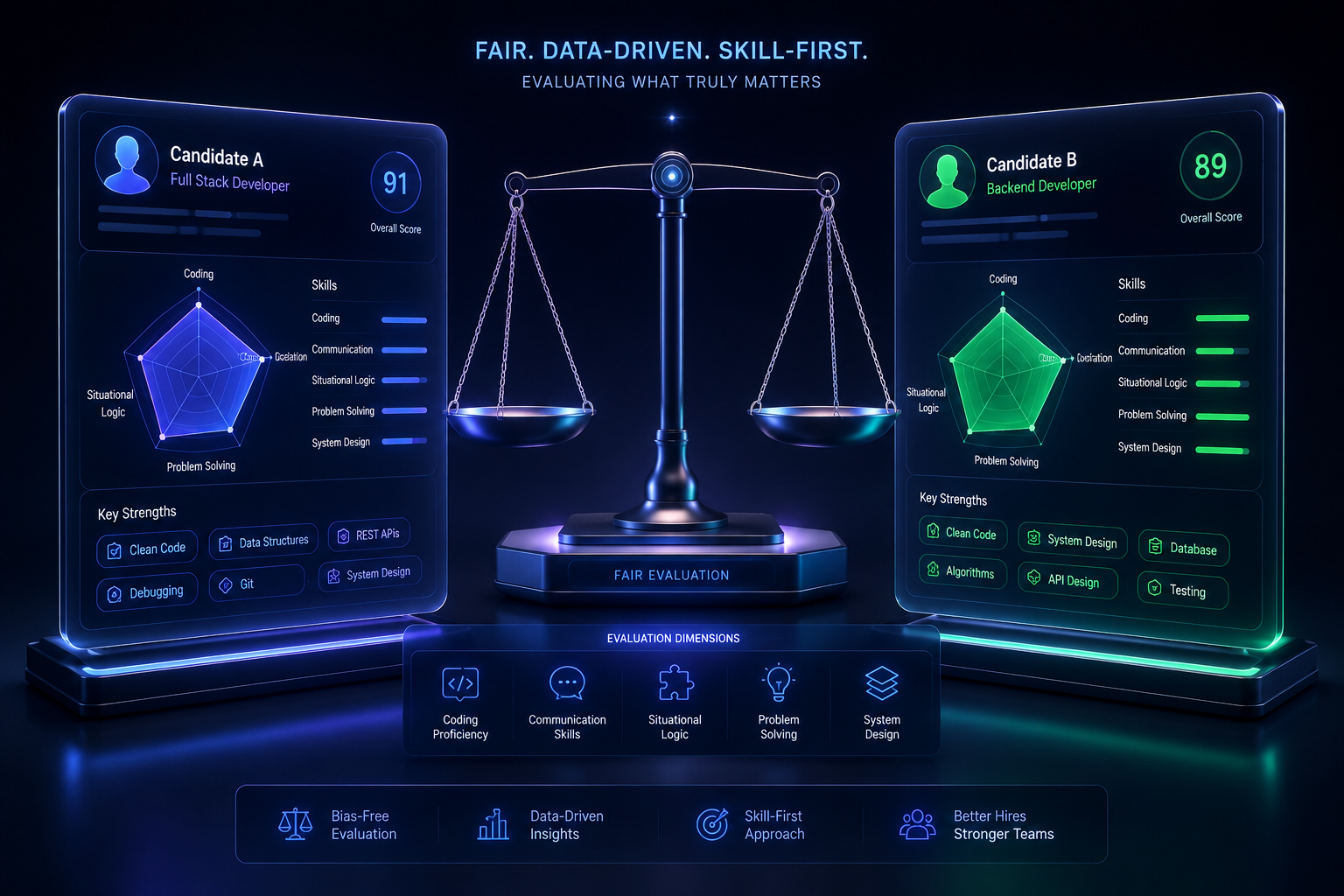
Unbiasing the Screen: Evaluating Competency, Not Pedigree
For decades, the recruitment industry has relied on proxy metrics to determine a candidate's suitability: what school they attended, what companies they previously worked for, and what keywords are on their resume. Unfortunately, these pedigree indicators are highly correlated with privilege, rather than actual job competency.
When human screeners review resumes, they are subject to affinity bias—the subconscious tendency to favor candidates who share similar backgrounds, schools, or interests. This results in highly homogenous teams and leaves qualified, diverse talent overlooked.
The Pedigree Trap
Relying on university names or previous company brands creates a self-reinforcing loop. Candidates from affluent backgrounds attend target schools, receive offers from brand-name companies, and are prioritized for new roles.
Meanwhile, high-performing graduates from lesser-known universities or self-taught professionals are screened out by keyword systems. This pedigree bias limits the talent pool and prevents organizations from building truly diverse, resilient workforces.
How Blind AI Screenings Level the Playing Field
Blind evaluation systems powered by objective AI focus entirely on how a candidate articulates answers, solves problems, and behaves during situational judgment exercises.
1. Removing Identification Anchors The AI screening agent is designed to focus on the semantic content of the candidate's answers. Crucially, identifiers like name, age, gender, geographic location, and university names are stripped out of the primary evaluation matrix.
2. Standardized Performance Indicators Every applicant is asked a standardized, role-specific set of situational and technical questions. The AI evaluates the structure of their arguments, the logic behind their decisions, and their problem-solving methodology against a pre-audited competency framework.
3. Focus on Practical Competencies Rather than asking "Where did you learn to write code?" or "Which firm did you practice management at?", the assessment focuses on real-world scenarios: - "How would you handle a production bug under a tight release schedule?" - "Describe a time you had to deliver difficult feedback to a peer."
Auditability and Continuous Alignment
Unlike the subjective opinions of human interviewers, AI assessments are completely auditable. The logic models can be regularly tested for adverse impact and demographic parity, ensuring that the system remains fair, unbiased, and compliant with local employment standards.
"Our latest auditing results indicate that teams utilizing blind AI assessments saw a 34% increase in candidate diversity progressing to the final round, accompanied by a 15% improvement in post-hire performance indicators."
By shifting the focus from background credentials to demonstrable skills, organizations can discover hidden talent, reduce time-to-hire, and build teams that are truly optimized for performance.